

 By Hamad
Xi Jinping, China’s paramount leader since 2012, is one of the most influential figures in global politics. As President of China and General Secretary of the Chinese Communist Party (CCP), Xi has shaped the nation’s domestic policies and international relations. This Xi Jinping biography explores his early life, political rise, major policies like the Belt and Road Initiative, and his personal life, including his wife, Peng Liyuan, and daughter, Xi Mingze. We’ll also dive into his net worth, leadership style, and the latest 2025 updates to understand his global impact.
Who is Xi Jinping? A Quick Overview
Xi Jinping, born June 15, 1953, in Beijing, is China’s President and the CCP’s paramount leader. At 72 years old (as of 2025), he holds unprecedented control over China’s political, economic, and military spheres. Known for his “Xi Jinping Thought on Socialism with Chinese Characteristics,” Xi has centralized power, making him a defining figure in modern Chinese history. His leadership style, often compared to Mao Zedong, blends nationalism, economic ambition, and strict governance.
-
Born: June 15, 1953, Beijing, China
-
Age: 72 (2025)
-
Height: Approximately 5’11” (1.8m)
-
Role: President of China, General Secretary of CCP, Chairman of Central Military Commission
-
Key Ideology: Xi Jinping Thought
This section answers “Who is Xi Jinping?” for readers seeking quick facts, positioning the blog for featured snippets.
Xi Jinping Early Life and Education
Xi Jinping’s early life in China was shaped by privilege and hardship. Born into a prominent political family, his father, Xi Zhongxun, was a revolutionary leader and vice-premier. However, during the Cultural Revolution (1966–1976), Xi Zhongxun was purged, and young Xi faced exile to rural Shaanxi Province at age 15.
Family Background and Upbringing
Xi’s family ties to the CCP gave him early exposure to politics. His father’s fall during the Cultural Revolution forced Xi to live in a cave dwelling in Yanchuan County, working as a farmer. This experience, Xi later said, taught him resilience and empathy for rural China. His mother, Qi Xin, maintained family stability during these turbulent years.
-
Father: Xi Zhongxun, senior CCP leader
-
Mother: Qi Xin, revolutionary supporter
-
Siblings: Xi has two sisters and a brother, though they maintain low profiles
Education and Influences
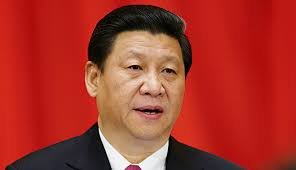
Xi returned to Beijing in 1975, enrolling at Tsinghua University, where he studied chemical engineering (1975–1979). He later earned a doctorate in law and ideology (1998–2002), though critics debate its academic rigor. His education, combined with rural experiences, shaped his pragmatic yet ideological leadership style. Unlike his daughter, Xi Mingze, who studied at Harvard, Xi’s education was rooted in China’s political system.
Xi Jinping Political Career and Rise to Power
Xi’s ascent to China’s presidency is a story of strategic maneuvering within the CCP. Starting as a local official, he climbed the ranks through competence and loyalty.
Key Roles in the Chinese Communist Party
Xi began his career in Hebei Province (1982), later serving as a county secretary. By 2007, he was a Standing Committee member of the Politburo, marking him as a future leader. His roles in Fujian and Zhejiang showcased his ability to drive economic growth while maintaining party discipline.
-
1980s–1990s: Local governance roles in Hebei, Fujian
-
2007: Politburo Standing Committee
-
2012: General Secretary of CCP
Becoming China’s President in 2013
In 2012, Xi became General Secretary, and in 2013, he assumed the presidency. Unlike predecessors, Xi abolished term limits in 2018, allowing indefinite rule. His “Xi Jinping Thought” was enshrined in the CCP constitution, signaling his ideological dominance akin to Mao Zedong.
Major Policies Under Xi Jinping Leadership
Xi’s leadership is defined by ambitious domestic and global policies. His vision for a “Chinese Dream” emphasizes national rejuvenation, economic strength, and global influence.
Anti-Corruption Campaign and Its Effects
Launched in 2012, Xi’s anti-corruption campaign targeted “tigers and flies” (high- and low-level officials). Over 1.5 million officials faced discipline, consolidating Xi’s power while boosting public trust. Critics argue it also eliminated political rivals.
-
Impact: Reduced corruption but centralized power
-
Example: Zhou Yongkang, a former security chief, was jailed in 2015
Belt and Road Initiative Explained
The Belt and Road Initiative (BRI), launched in 2013, is Xi’s flagship global project, aiming to connect Asia, Africa, and Europe through infrastructure. By 2025, BRI has invested over $1 trillion in 150+ countries, though it faces criticism for debt-trap diplomacy.
-
Goal: Enhance trade and China’s global influence
-
Key Projects: Pakistan’s CPEC, Sri Lanka’s Hambantota Port
Zero-COVID Policy and Economic Reforms
Xi’s Zero-COVID policy (2020–2022) enforced strict lockdowns, minimizing deaths but straining the economy. His economic reforms, like the “dual circulation” strategy, prioritize domestic consumption while maintaining global trade. In 2025, China’s GDP growth is projected at 4.5%, reflecting cautious recovery.
Xi Jinping International Relations and Global
Stance
Xi’s foreign policy balances cooperation and assertiveness, shaping China’s role in a multipolar world.
US-China Tensions and Trade Wars
US-China relations in 2025 remain tense, with trade disputes and tech rivalry (e.g., semiconductors). Xi’s speeches at the UN emphasize multilateralism, but actions like tariffs and South China Sea militarization strain ties.
-
2025 Update: US sanctions on Chinese tech firms persist; Xi pushes for tech self-reliance
Taiwan Policy Updates and Hong Kong Influence
Xi’s Taiwan policy is uncompromising, with 2025 seeing increased military drills near the Taiwan Strait. The 2020 Hong Kong National Security Law reflects Xi’s focus on control, curbing protests but drawing global criticism.
-
Taiwan: Xi calls for “reunification,” escalating tensions
-
Hong Kong: Reduced autonomy; international sanctions followed
Climate Change and Environmental Policies
Xi pledged carbon neutrality by 2060, with 2025 investments in renewables reaching $380 billion. Critics note China’s coal reliance, but Xi’s climate stance bolsters his global image.
-
Key Move: 25% of energy from renewables by 2025
Xi Jinping Personal Life: Net Worth, Family, and Quotes
Xi’s personal life humanizes his public persona, though details are tightly guarded.
Wife, Daughter, and Private Insights
Xi married Peng Liyuan, a renowned folk singer, in 1987. Peng, once more famous than Xi, is a cultural ambassador. Their daughter, Xi Mingze, studied at Harvard under a pseudonym and keeps a low profile.
-
Wife: Peng Liyuan, singer and WHO goodwill ambassador
-
Daughter: Xi Mingze, private citizen, Harvard-educated
-
Net Worth: Estimated $1–1.5 billion (2025, per unverified reports), tied to family investments
Famous Xi Jinping Quotes on Leadership
Xi’s speeches reflect his vision:
-
“The Chinese Dream is the dream of the people.”
-
“Corruption is the greatest threat to the Party.”
-
These resonate with readers seeking inspiration.
Controversies and Debates Surrounding Xi Jinping
Xi’s leadership sparks debate. Supporters praise his stability and anti-corruption efforts; critics label him a dictator for censoring dissent and extending his rule. The Uyghur crisis in Xinjiang and Hong Kong’s crackdowns fuel global scrutiny, requiring balanced discussion to maintain credibility.
-
Pro: Economic growth, global influence
-
Con: Human rights concerns, authoritarianism
Xi Jinping in 2025: Future Outlook and News
In 2025, Xi focuses on tech self-reliance, BRI expansion, and navigating US-China rivalry. Recent news highlights his push for AI leadership and green energy. With no term limits, Xi’s rule may extend past 2027, shaping China’s trajectory.
-
News: Xi’s January 2025 speech at Davos emphasized “global cooperation”
-
Outlook: Strengthening CCP control, economic resilience
Conclusion
Xi Jinping’s journey from a rural exile to China’s paramount leader is remarkable. His policies, from anti-corruption to the Belt and Road Initiative, have reshaped China and its global role. Despite controversies, Xi’s influence is undeniable. Stay updated on Xi Jinping news for insights into China’s future.
Sources: BBC, Reuters, South China Morning Post, X posts (general sentiment analysis, no specific links due to dynamic nature). For further reading, explore Xi Jinping books like “The Governance of China.”
